SPECIALIZED CARGO SERVICES

Complex Cargo.
Precision Execution.

Atlantic Pacific Lines is ITAR-registered and DFARS-compliant for project cargo requiring route surveys, specialized equipment, and export license management across industrial, energy, and U.S. government sectors.

ITAR Registered
DFARS Compliant
OOG Specialists
ITAR
Registered
DFARS
Compliant
0
Years Experience
OOG
Specialists
Project Cargo
Heavy Lift OOG Cargo Flat Rack Open Top Breakbulk RoRo Heavy Lift OOG Cargo Flat Rack Open Top Breakbulk RoRo
About Project Cargo

Route Survey First. Equipment Second. Compliance Third.

Atlantic Pacific Lines does not confirm a project cargo booking until the route survey, equipment selection, and export compliance review are complete. Field surprises on complex cargo are preventable, and prevention is how APL operates.

  • Pre-booking route surveys for OOG moves covering clearances, weights, and permit requirements
  • ITAR-registered for USML export license management including DSP-5 and DSP-73 filings
  • DFARS-compliant transportation for U.S. government and DoD contractor shipments
  • Flat rack, open top, mafi trailers, breakbulk, and RoRo equipment sourced per cargo survey
  • Dedicated project manager assigned to every move from feasibility through site delivery
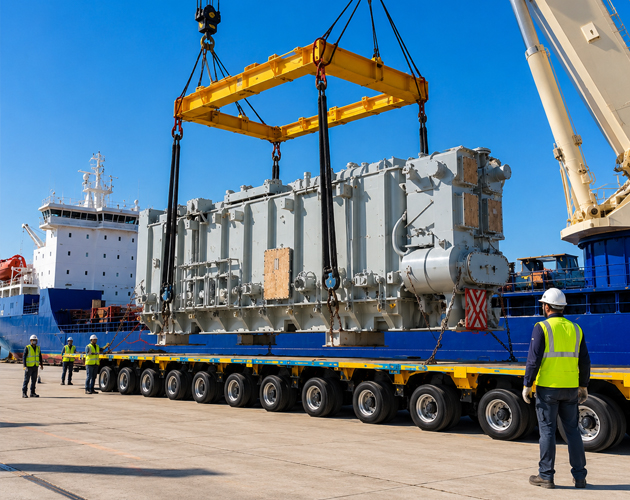
Heavy Lift OOG Cargo Flat Rack Open Top Breakbulk RoRo
Project Cargo Logistics — Atlantic Pacific Lines
Global Presence

Connecting Continents Through Seamless Shipments.

By the Numbers

The Compliance Credentials Complex Cargo Requires.

APL's project cargo credentials are operational prerequisites for moving controlled, oversized, and government-classified freight across international borders.

Request a Quote Today
ITAR
Active Registration
USML export license management
DFARS
Compliant Operations
DoD contractor transportation
0+
Years in Specialized Freight
Operating since 1995
Survey
Required Before Booking
On every OOG and heavy lift move
Why APL for Project Cargo

Six Steps That Prevent Field Failures on Complex Cargo

Every project cargo move at Atlantic Pacific Lines follows this sequence before cargo leaves the facility.

01
Step 1

Pre-Booking Cargo Survey

APL verifies or engineer-certifies cargo dimensions and weight distribution before any booking is confirmed.

Survey-led feasibility first
02
Step 2

Route Survey for OOG and Heavy Lift

Overland clearances, bridge ratings, state permit requirements, and port crane SWL are assessed before dispatch.

Clearances and SWL validated
03
Step 3

ITAR and EAR Export Compliance

Atlantic Pacific Lines reviews every manifest against USML and CCL and manages DSP and BIS license filings.

License workflow handled by APL
04
Step 4

Specialized Equipment Selection

Flat rack, open top, mafi trailers, heavy lift vessels, or charter are selected from the cargo survey results.

Equipment aligned to survey data
05
Step 5

Port and Terminal Coordination

Vessel intake, crane SWL, and OOG terminal pre-authorization are confirmed before any truck arrives at the gate.

Terminal readiness pre-confirmed
06
Step 6

Dedicated Project Manager

A single APL project manager owns every vendor relationship and exception across the full transport lifecycle.

Single owner from start to delivery
07
Sector Coverage

Energy, EPC, and U.S. Government Project Cargo

Atlantic Pacific Lines serves oil and gas, renewable energy, and federal agency clients under DFARS-compliant transportation contracts. Government transportation capability is registered under NAICS codes 483111, 483113, 488510, and 541614.

Government capability codes registered
Start Your Project

Submit Your Project Cargo RFQ

Share cargo dimensions, destination, timeline, and compliance requirements with Atlantic Pacific Lines for a route feasibility assessment and detailed quote.
No commitment required Response within 48 hours ITAR-registered forwarder
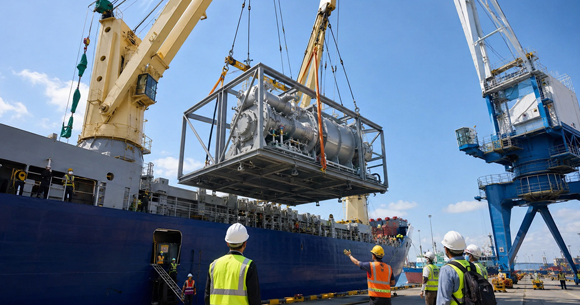
Project cargo logistics operations

Smart Solutions, Competitive Pricing, Unmatched Efficiency.

FAQ

Answers to Common Project Cargo Questions

Questions EPC contractors, industrial shippers, and government clients ask about project cargo logistics with Atlantic Pacific Lines.

Still have questions?

APL's project logistics team is available to assess route constraints, equipment options, and export compliance requirements for your specific cargo.

Talk to a Specialist

What makes cargo qualify as project cargo? +
Project cargo is freight that exceeds standard ISO container dimensions or weight, requires specialized equipment beyond a normal container booking, or involves export control regulations such as ITAR or EAR compliance. Atlantic Pacific Lines handles route surveys, specialized equipment, permit management, and government compliance as part of the project cargo service.
Why does APL require a route survey before confirming an OOG booking? +
A route survey identifies bridge weight ratings, overhead clearances, turning constraints, and state permit requirements before the truck departs. Finding these obstacles at a checkpoint after departure creates mandatory holds, cargo repositioning costs, and missed vessel sailings that cannot be resolved at the terminal gate.
What is ITAR and why does APL's registration matter? +
ITAR registration authorizes Atlantic Pacific Lines to manage export shipments of defense articles on the U.S. Munitions List. APL handles DSP-5 permanent export licenses, DSP-73 temporary authorizations, end-use certificate collection, and AES filings with correct license citations before cargo moves.
Can Atlantic Pacific Lines handle DoD contractor project cargo? +
Yes. Atlantic Pacific Lines is DFARS-compliant and handles Department of Defense contractor shipments requiring controlled carrier selection, specific documentation chains, security clearance compliance, and end-use verification. APL's government transportation capability is registered under NAICS codes 483111, 483113, 488510, and 541614.
What equipment does APL source for heavy lift and OOG cargo? +
Atlantic Pacific Lines sources flat rack containers for OOG width and length, open top for OOG height, bolster and mafi trailers for RoRo, heavy lift ships for large loads, and charter arrangements for ultra-heavy or time-critical moves. Equipment selection is always driven by the pre-booking cargo survey, not by what is available on the day of loading.
Does Atlantic Pacific Lines offer project cargo insurance? +
Yes. APL arranges specialized all-risk project cargo insurance with values appropriate to high-cost industrial equipment. Coverage includes loading, ocean transit, and unloading risk. Atlantic Pacific Lines advises on general average exposure and carrier liability limits for every project move.
What is the difference between breakbulk, RoRo, and OOG shipping? +
Breakbulk refers to cargo shipped as individual pieces or unitized loads rather than in containers or on vehicles, typically on general cargo vessels with crane handling at port. RoRo (Roll-on/Roll-off) applies to cargo that drives or rolls onto a purpose-built RoRo vessel using ramps, including vehicles, trailers, and wheeled industrial equipment. Out-of-gauge (OOG) refers to cargo that exceeds the dimensions of a standard 20ft or 40ft container in height, width, or length, which is shipped on flat rack or open top containers rather than on breakbulk or RoRo vessels. Atlantic Pacific Lines selects the appropriate mode based on cargo dimensions, weight, port infrastructure at origin and destination, and cost-efficiency for each specific project cargo move.